




For Glaucoma Physician’s Surgical Pearls video series, Jeremy Nortey, MD, and J. Minjy Kang, MD, MA, show how subtle adjustments in goniolens tilt can optimize angle visualization during surgery. Transcript of the narration follows below:
This is Jeremy Nortey, MD, a PGY-3 at Northwestern University. This is a case that I performed with Dr. Kang that demonstrates how to optimize your goniolens view during surgery.
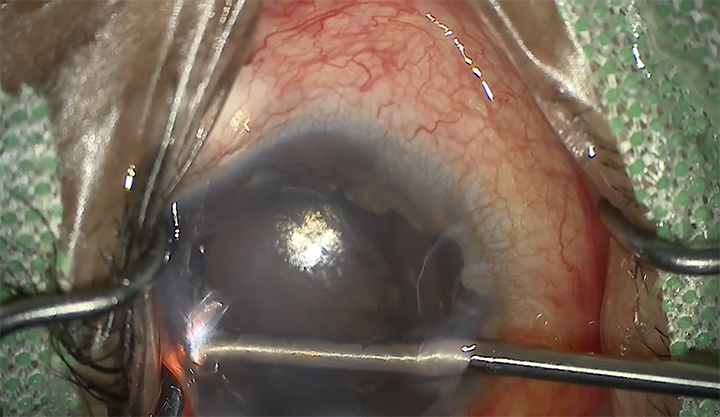
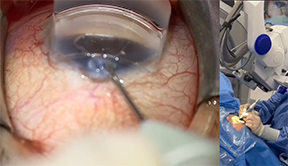
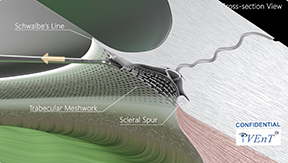
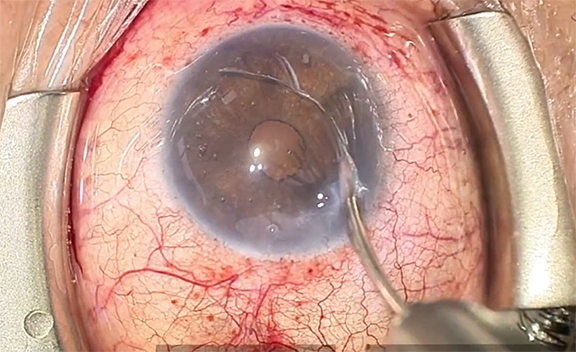
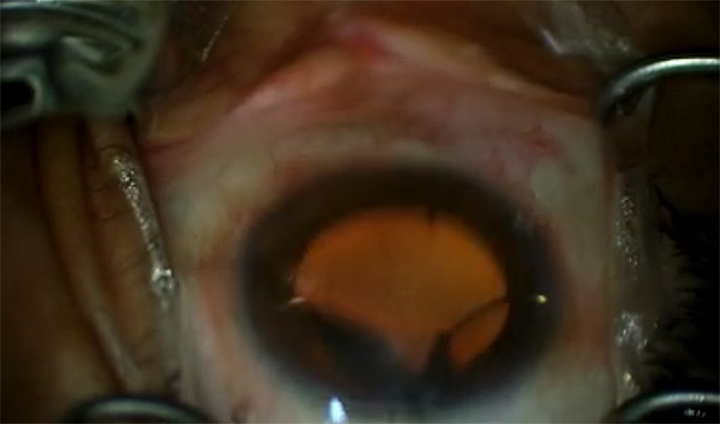
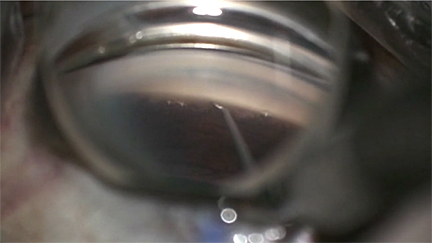
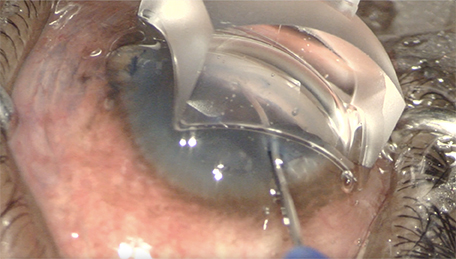
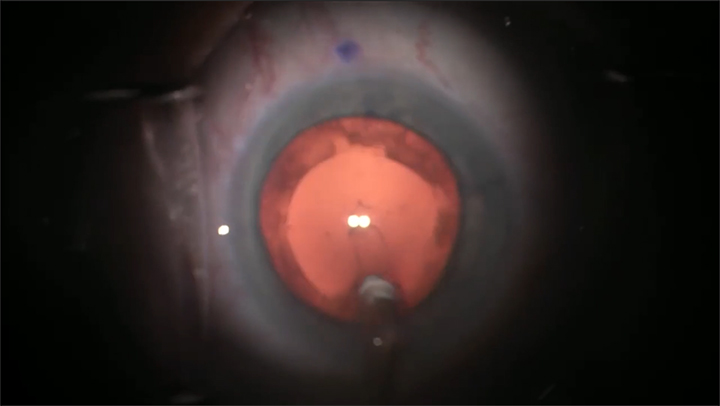
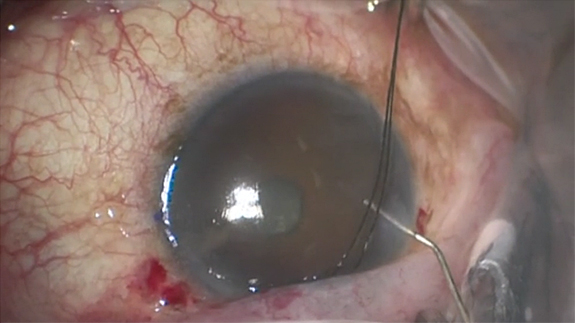
Here, we place viscoelastic over the cornea and then our goniolens over that area. As the microscope focuses, we’re able to visualize the different structures within the angle. In just a moment, we demonstrate that as we slide and tilt the goniolens nasally, striae start to form and our view becomes limited. You can slide the lens back to the original position and instead tilt the lens temporally; the striae disappear and we can see a wider view of the angle, demonstrating that tilting it temporally, as opposed to nasally, is the optimal positioning for the goniolens.
Even with the heavy hand, as shown here, by gently providing pressure while the lens is tilted more temporally, striae do not form, and you can maintain a view. We demonstrate one more time that when shifting the lens nasally, striae form.Providing pressure here deepen the striae, further obstructing the view of the angle. At this moment, we tilt the lens temporal once more. The view becomes optimal, we’re seeing our structures, the striae have disappeared, and we are now ready to perform the goniotomy. Furthermore, if you need to rotate the eye slightly away from you, as demonstrated here in the video, having the goniolens tilted temporally can help leverage the position of the rotated eye and provide a more en face view of the angle.
Thank you for watching our video. We hope these tips will assist in helping you get a great en face view without striae for angle surgery.


Other Videos From Series