





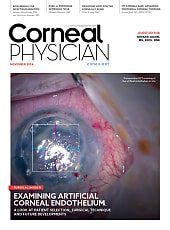

Clinical Report: Enhanced Visualization and Workflow with BVI’s Leos ECP Platform
Overview
BVI’s Leos platform for endoscopic cyclophotocoagulation (ECP) introduces significant upgrades including enhanced digital visualization, single-use probes, and streamlined workflow. Early clinical adopters report improved safety, efficacy, and ease of use, potentially expanding ECP adoption among cataract and glaucoma surgeons.
Background
Endoscopic cyclophotocoagulation (ECP) is a laser procedure targeting the ciliary processes to reduce intraocular pressure in glaucoma patients, often performed alongside cataract surgery. Previous ECP systems, such as the Endo Optiks platform, had limitations including fragile reusable fiber optic probes and complex workflow requiring multiple trained staff. These challenges limited broader adoption despite ECP’s clinical benefits. The new Leos system by BVI aims to modernize ECP with digital imaging, automation, and single-use components to improve visualization, safety, and procedural efficiency.
Data Highlights
The Leos system features a 40,000-pixel digital imaging sensor with a 120° field of view, autofocus, and auto-illumination. The VueProbe is a single-use 19-gauge, 30 mm curved cannula laser endoscope with an 810 nm diode laser and red aiming beam. The system includes a 21-inch heads-up monitor, touchscreen control panel, wireless footswitch, and USB/HDMI video outputs. These technological advancements reduce the need for multiple OR personnel and simplify intraoperative adjustments.
Key Findings
- Leos provides significantly improved visualization of ciliary processes via a high-resolution digital sensor, enhancing safety and efficacy of ECP.
- The single-use VueProbe eliminates variability and image degradation associated with reusable fiber optic probes, ensuring consistent image quality.
- Automated features such as autofocus, auto-illumination, and digital image orientation reduce manual adjustments and staff dependency during surgery.
- The portable console with touchscreen and wireless footswitch streamlines workflow, allowing surgeons greater independence and reducing OR personnel requirements.
- Improved visualization facilitates more precise treatment, lowering the risk of overtreatment and postoperative inflammation.
- The system’s ease of use may broaden ECP adoption, including among surgeons less experienced with the procedure, and supports advanced techniques like posterior ciliary process treatment (ECP+).
Clinical Implications
The Leos platform’s enhanced visualization and automation simplify ECP procedures, potentially increasing surgeon confidence and reducing intraoperative variability. Its single-use probe design and streamlined workflow may improve patient safety by minimizing infection risk and procedural errors. These advances could expand the use of ECP in glaucoma management, including in combined cataract surgeries and for more advanced disease stages.
Conclusion
BVI’s Leos system represents a significant upgrade in ECP technology by integrating digital imaging, single-use probes, and automated controls. This modernized platform enhances visualization, safety, and workflow efficiency, likely facilitating wider adoption and improved clinical outcomes in glaucoma surgery.
Related Resources & Content
- BVI/2025 -- A Long-Awaited Upgrade for Endoscopic Cyclophotocoagulation
This content is an AI-generated, fully rewritten summary based on a published scholarly article. It does not reproduce the original text and is not a substitute for the original publication. Readers are encouraged to consult the source for full context, data, and methodology.